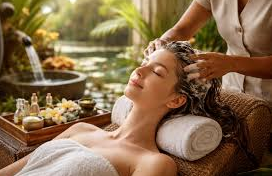

There is a particular kind of calm that comes from having someone care for your hair and scalp with slow, unhurried attention. In recent years, the head spa has grown from a niche offering into one of the most talked-about treatments in salons and wellness studios. Clients arrive carrying the tension of long weeks at desks and restless nights, and they leave with shoulders lowered, breathing slowed, and a sense of having truly rested. The treatment is simple in concept and generous in effect, which is exactly why it has found such a loyal following.
A head spa is built around the scalp rather than the hair alone. The session usually begins with a gentle cleansing, followed by a long massage that works through the scalp with slow, rhythmic movements. Warm water plays a central role, washing over the head in a steady stream that many clients describe as deeply soothing. The combination of warmth, touch, and quiet creates an experience that feels closer to a spa ritual than to an ordinary hair wash, and it is this feeling that keeps people coming back.
At the heart of the treatment is the bed itself, because the client spends the whole session lying back while water and hands do their work. A well-designed head spa bed supports the neck and shoulders, keeps the head at the right angle for rinsing, and manages water neatly so the client stays dry and comfortable. Without a purpose-built bed, the treatment becomes awkward for both the client and the therapist, and much of the relaxation is lost to practical problems.
The benefits clients report go beyond clean hair. A thorough scalp massage can ease the tightness that builds up around the temples and the base of the skull, especially for people who spend long hours looking at screens. The warm water and slow pace encourage the whole body to unwind, and many clients say they sleep better on the night after a session. While no single treatment can promise specific health results, the relaxation itself is real, and it is the main reason the service has become so popular.
What the Experience Feels Like
For someone trying a head spa for the first time, the experience is best described as unhurried. The therapist begins slowly, checking the water temperature and making sure the client is comfortable before moving into the massage. The sounds are soft, the lighting is usually low, and there is no rush to move on to the next step. This pace is deliberate, because the treatment works best when the client has time to stop thinking about the day and simply notice the sensations.
The scalp massage itself is the centrepiece. Skilled hands work in small circles, moving across the scalp in a pattern that covers the whole head rather than focusing on one spot. Some therapists use their fingertips, others use soft brushes or gentle tools, and the pressure is adjusted to what the client finds comfortable. The aim is not force but steady, rhythmic attention, and the best sessions feel like a conversation between the therapist’s hands and the client’s tension.
Water management is where good design shows its value. The bed needs a basin or channel that catches the water cleanly, a drainage arrangement that works without fuss, and a way to keep the client’s clothing and the surrounding floor dry. When these details are right, the therapist can focus entirely on the massage instead of worrying about splashes. When they are wrong, the session is interrupted again and again, and the mood breaks.
See also: Discover India’s Heritage with Delhi, Agra, Jaipur and Mathura Tours
Choosing the Right Setup
A salon thinking about adding head spa services should start by looking at the space available. The treatment needs a quiet corner where water can be supplied and drained, and where the client will not be disturbed by the noise of the main salon floor. The bed should fit the room with enough space around it for the therapist to move freely, and the plumbing needs to be planned before the bed is ordered rather than improvised afterwards.
It also helps to think about who will use the service. Some clients come for relaxation, others for scalp care, and the treatment can be shaped to suit either. Offering a shorter introductory session alongside a longer, fuller ritual gives people an easy way to try it for the first time. Training matters too, because a head spa is a skill, and the therapist’s touch is what turns good equipment into a memorable treatment.
Frequently Asked Questions
1. What is a head spa treatment?
A head spa is a relaxing salon treatment focused on the scalp. It combines a deep cleanse, a long scalp massage, and warm water rinsing, all designed to ease tension and leave the hair and scalp feeling refreshed.
2. How long does a head spa session usually take?
Sessions vary from salon to salon, but most last long enough for the client to fully relax, often around an hour. Shorter introductory sessions are also common for first-time visitors who want to try the experience.
3. What should a salon consider before offering head spa treatments?
The salon needs a suitable bed, a reliable water supply and drainage, a quiet space, and therapists trained in scalp massage. Planning these details in advance makes the service smoother for both staff and clients.
Conclusion
The head spa has earned its popularity by offering something simple and rare: an hour of genuine calm. With the right bed, a quiet space, and a therapist who understands the rhythm of the treatment, a salon can offer an experience that clients remember and return for. It is a service built on attention and care, and when those are in place, the treatment speaks for itself.