Newsletter Subscribe
Enter your email address below and subscribe to our newsletter
Enter your email address below and subscribe to our newsletter

 ByJohn A
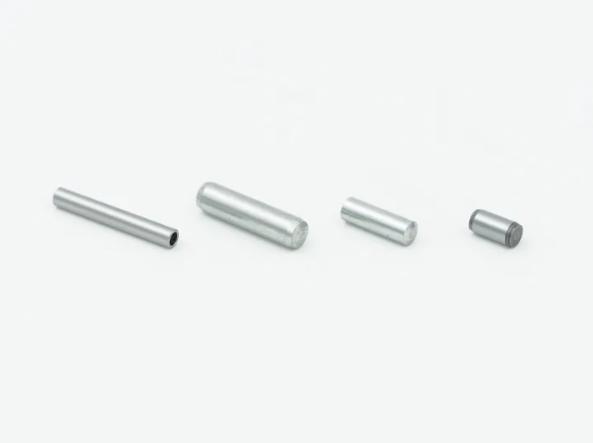
If you build machines where two parts have to meet in the same place every time, the way those parts are located matters as much as how they are fastened together. This is the job of dowel pins, small solid cylinders which hold mating components in a fixed position through assembly and service.
When specified correctly, dowel pins give engineers a dependable way to hold alignment to close tolerances, so housings and tool plates go back together in the same position after every service has been executed. The right choice depends on size, fit, hardness and material. Keep on reading to know more about how each factor supports consistent performance.
Clearance Holes Allow Sideways Play: A bolt passes through a clearance hole, so it clamps parts together while the hole still allows a little sideways play. Well-specified dowel pins fitted into closely sized holes in both parts take up that play and fix their relative position. So, the bolt looks after clamping and the pin looks after location.
Repeatable Reassembly after Servicing: Pinned joints return to their original position each time they are taken apart and refitted, which keeps setting-up time short. In everyday workshop practice, service engineers often find that pinned gearbox covers and machine bases need little or no realignment once the pins are back in place. On larger machines, this probably saves considerable time.
See also: Anti-Corrosion Coating Additive Selection: A Formulator’s Perspective
Dimensional Accuracy and Hole Fit: Precision pins are ground to a tight diameter tolerance, so they press into reamed holes with a predictable grip. Many designs use a tight fit in one part and a slightly freer fit in the other, which keeps assembly simple. If both holes are reamed tight, then fitting and removal take extra effort.
Hardness and Material Grade: Hardened steel pins suit joints which carry heavy loads, because a hard surface keeps its shape. Many hardened pins sit between 58 and 62 HRC. Where operating temperatures vary, pin and housing materials with similar thermal expansion help the fit stay consistent. For damp surroundings, stainless steel grades such as A2 or A4 are probably the better choice.
Automotive and Aerospace Assemblies: Vehicle and aircraft builders use dowel pins wherever parts must line up the same way on every unit built. In cars and commercial vehicles, they locate cylinder heads on engine blocks and hold transmission housings in line. Aerospace assemblies use them within wing structures and landing gear, where consistent location supports close build accuracy.
Production Equipment and Construction Machinery: Jigs, fixtures, indexing tables and positioning systems rely on pins to place a workpiece in the same spot for every machining cycle. In construction machinery, pins locate hydraulic equipment and pivot assemblies which carry heavy loads day after day. So, the same principle holds whether a machine cuts metal or moves earth.
Where Spring Pins Fit Best: Spring pins are rolled from strip steel and compress as they enter the hole, so they accept a wider range of hole sizes. They suit hinges and light assemblies where quick fitting comes first. If instead the joint needs close positional accuracy, then a solid ground pin in a reamed hole gives a more precise result.
Shoulder Bolts versus Pinned Joints: Shoulder bolts locate and fasten in a single component, which makes them a good fit for pivot points and linkages. Their accuracy comes from the ground shoulder sitting in its hole. For fixed joints which need close location and strong clamping, many designers pair solid pins with standard bolts so each fastener does its own job.
Settling the Specification Early: The best time to decide pin size, fit and material is while the part drawings are still being prepared. At that point, hole sizes and reaming steps can be planned alongside the material grade. If the decision waits until parts are machined, then the choices narrow and any change usually means revisiting finished components.
Long Service with Easy Maintenance: Pins matched to the load and setting keep their fit through repeated service cycles, so an assembly performs the same way year after year. Pull-out versions with an internal thread come out easily and suit blind holes. Both qualities suit a planned preventive maintenance programme, because covers and fixtures can be opened and refitted quickly on each scheduled visit.
What a Complete Order Should Cover: A clear pin specification lists every dimension and property which affects how the joint locates and holds. Once these details are settled, dowel pins arrive ready to fit and the assembly team can work to the drawing with confidence. The points below cover what engineers and buyers most often check before placing an order.
Correctly specified pins give your assemblies the same accurate location on the first build and on every rebuild, which supports consistent performance throughout their service life. Agreeing the details now is simpler than revisiting finished parts later. Get in touch with a precision fastener manufacturer today to discuss the size, fit, hardness and material which your next assembly needs.